

Welcome to an adventure like no other. Get ready to embark on a journey into the world of off-grid living in the captivating state of Arizona. Prepare to be amazed by the possibilities and advantages that await you in this stunning landscape. We’re Freeom Construction & Design, and as experts in custom home building, off-grid living, and design consultation, we’re thrilled to introduce you to the incredible world of off-grid living in Arizona.
Today, we’re here to answer a burning question: “Is Arizona a good state for living off-grid?” So, fasten your seatbelts as we dive into a journey filled with endless sunshine, breathtaking natural landscapes, and countless benefits. Join us as we uncover the true potential of off-grid living in the magnificent Grand Canyon State!
Climate and Geography of Arizona
Arizona is known for its diverse climate and geography, offering unique possibilities for off-grid living. From arid deserts to high mountain ranges, the state provides a range of landscapes and weather conditions. Understanding the climate and geography is essential for anyone considering living off-grid in Arizona.
- Arid Deserts: The majority of Arizona is made up of arid deserts, such as the Sonoran Desert and the Mojave Desert. These regions are characterized by hot summers, mild winters, and low precipitation.
- High Plateaus: The northern part of the state is home to high plateaus, including the Colorado Plateau and the Kaibab Plateau. These areas experience cooler temperatures and often receive more precipitation than the deserts.
- Mountain Ranges: Arizona is home to several mountain ranges, such as the San Francisco Mountains, the Santa Catalina Mountains, and the Huachuca Mountains. These mountains offer cooler temperatures and diverse ecosystems.
- Canyons and Valleys: The state is famous for its canyons and valleys, including the Grand Canyon, Oak Creek Canyon, and the Verde Valley. These areas provide unique beauty and recreational opportunities.
The climate and geography of Arizona present both advantages and challenges for off-grid living. In the next sections, we will explore the availability of natural resources, the regulations and permits required, as well as the pros and challenges of living off-grid in Arizona.
Availability of Natural Resources for Off-Grid Living in Arizona
Living off-grid in Arizona offers the opportunity to rely on and make use of the abundant natural resources available in the state. From ample sunlight to vast open spaces, here are some of the natural resources that make Arizona a suitable location for off-grid living:
- Sunshine: Arizona is known as the “Sunshine State” for a reason. The state receives an average of 300 days of sunshine per year, making it an ideal location for solar power generation.
- Wind: Certain regions of Arizona experience consistent wind patterns, creating a potential for harnessing wind energy through turbines.
- Water: Although Arizona is known for its arid climate, there are still water resources available. Rainwater harvesting and water conservation techniques can be used to ensure a sustainable water supply.
- Geothermal Energy: Arizona has geothermal systems underground that can be tapped into for heating and cooling purposes.
- Native Plants and Wildlife: The natural flora and fauna of Arizona can provide sources of food, medicinal plants, and materials for building and crafting.
- Land: The vast open spaces in Arizona offer plenty of opportunities for off-grid living, including the possibility of growing your own food and raising livestock.
By leveraging these natural resources, individuals and families can create self-sustaining systems and reduce their reliance on traditional utilities. However, it’s important to be aware of any regulations or permits required for utilizing these resources for off-grid living, which will be discussed in the next section of this article.
Regulations and Permits Required for Off-Grid Living in Arizona
Living off-grid in Arizona requires understanding and adhering to specific regulations and obtaining the necessary permits. Here are some important considerations for off-grid living in Arizona:
- Zoning Regulations: Check the zoning regulations in your desired location to ensure that off-grid living is allowed. Some areas may have restrictions on the type of dwellings or land usage.
- Building Permits: Depending on the type of structure you plan to build, you may need to obtain building permits. Contact your local building department for information on the specific requirements and processes.
- Septic System Regulations: If you require a septic system for waste management, you will need to comply with state and county regulations. This includes proper design, installation, and inspection.
- Water Rights: If you plan to use alternative water sources, such as well water or rainwater harvesting, it’s important to understand the water rights regulations and obtain the necessary permits.
- Solar and Wind Energy Systems: To utilize solar panels or wind turbines for off-grid power generation, you may need to comply with regulations related to renewable energy systems, electrical codes, and interconnection requirements.
- Fire Safety: Off-grid properties in fire-prone areas may need to adhere to additional fire safety regulations, including clearance requirements and fire-resistant building materials.
It is crucial to research and consult with local authorities or professionals to ensure full compliance with regulations and obtain the necessary permits before embarking on an off-grid living journey in Arizona.
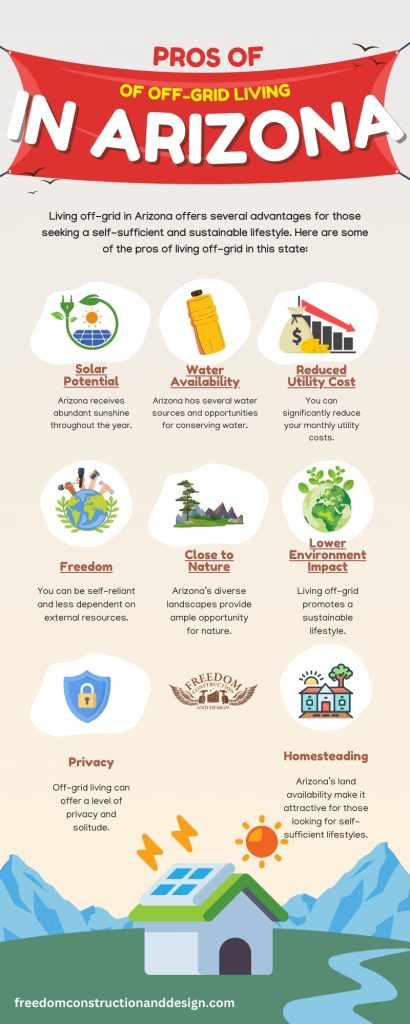
Pros of Living Off-Grid in Arizona
Living off-grid in Arizona offers several advantages for those seeking a self-sufficient and sustainable lifestyle. Here are some of the pros of living off-grid in this state:
- Solar Potential: Arizona receives abundant sunshine throughout the year, making it an ideal location for harnessing solar power for off-grid energy needs.
- Water Availability: Despite being a desert state, Arizona has several water resources and offers opportunities for collecting and conserving rainwater or utilizing underground wells.
- Reduced Utility Costs: By generating your own power and conserving resources, living off-grid in Arizona can significantly reduce or eliminate monthly utility bills, saving you money in the long run.
- Freedom and Independence: Living off-grid allows you to be self-reliant and less dependent on external resources, providing a sense of freedom and independence.
- Closer to Nature: Arizona’s diverse landscapes, including deserts, forests, and mountains, provide ample opportunities for outdoor activities, wildlife observation, and a deeper connection to nature.
- Lower Environmental Impact: Living off-grid promotes a sustainable lifestyle, minimizing reliance on fossil fuels and reducing your carbon footprint.
- Privacy and Solitude: Off-grid living can offer a level of privacy and solitude that may be difficult to find in more populated areas.
- Opportunity for Homesteading: Arizona’s land availability and homesteading opportunities make it attractive for individuals looking to live a self-sufficient lifestyle and pursue agriculture or livestock farming.
These various benefits make Arizona an enticing state for those considering off-grid living as a way to reduce their environmental impact, increase self-sufficiency, and embrace the natural beauty of the region.
Challenges of Living Off-Grid in Arizona
Living off-grid in Arizona presents some unique challenges that individuals or families considering this lifestyle should be aware of. While the state offers opportunities for self-sustainability and independence, certain factors may pose difficulties. Here are some of the challenges to consider when living off-grid in Arizona:
- Extreme temperatures: Arizona experiences hot desert summers and cold winters, which can impact off-grid living conditions.
- Water scarcity: Due to the arid climate, water availability and access can be limited, requiring careful planning and conservation efforts.
- Energy demands: Managing energy needs, especially during peak summer months, can be a challenge without access to traditional power grids.
- Regulations and permits: Off-grid living may require navigating various regulations and obtaining permits for certain sustainable systems, such as rainwater harvesting or alternative energy sources.
- Remote locations: Many off-grid properties in Arizona are in remote areas, which can present logistical challenges for supplies, emergency services, and social interactions.
While these challenges exist, many individuals find creative solutions and successfully live off-grid in Arizona. It is important to carefully research and plan for these obstacles to ensure a sustainable and comfortable off-grid lifestyle.
Conclusion
Living off-grid in Arizona offers a multitude of possibilities for individuals who are seeking a self-sufficient and sustainable lifestyle. The state’s favorable climate and geography, along with the availability of natural resources, make it an ideal location for off-grid living. Additionally, Arizona offers a competitive advantage with fewer regulations and permits required compared to other states, allowing for greater freedom and flexibility in building off-grid homes.
At Freedom Construction & Design, we specialize in building custom off-grid homes in Arizona. Whether you are looking to embark on a new off-grid lifestyle or seeking to remodel your existing home to become self-sufficient, our team is here to help. Contact us at 406-560-7430 or email melissa@freedomconstructionanddesign.com to discuss your off-grid home building or remodeling needs. Let us assist you in achieving your vision of living off-grid in Arizona.